
Bishnu Pandey Park- Sunwal, Nawalparasi 2026
Bishnu Pandey Park The proposed design of 93,000 SQM public park in Sunwal, Nawalparasi envisions a vibrant, inclusive, and ecologically grounded recreational space. Bounded by lush forest cover on the east and west, and a primary access road to the south, the site offers an exceptional opportunity to create a seamless blend of nature, community, and climate-sensitive design. The Park is envisioned as a breathing space for the growing city—a place that reconnects people with nature while accommodating diverse user needs.
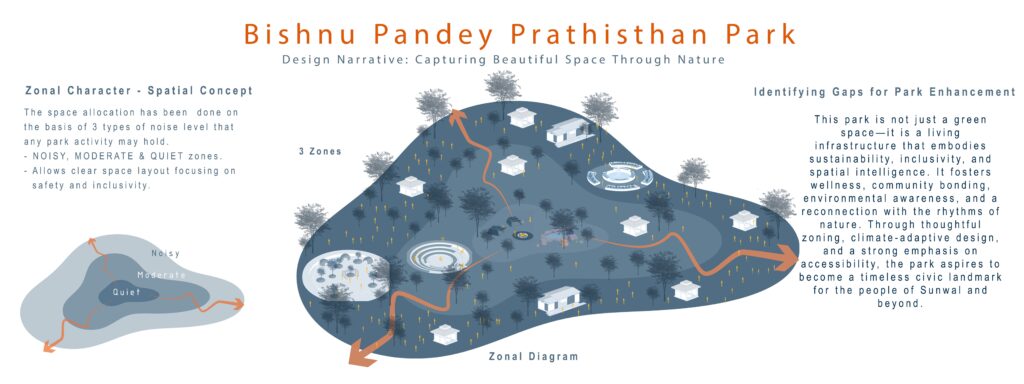
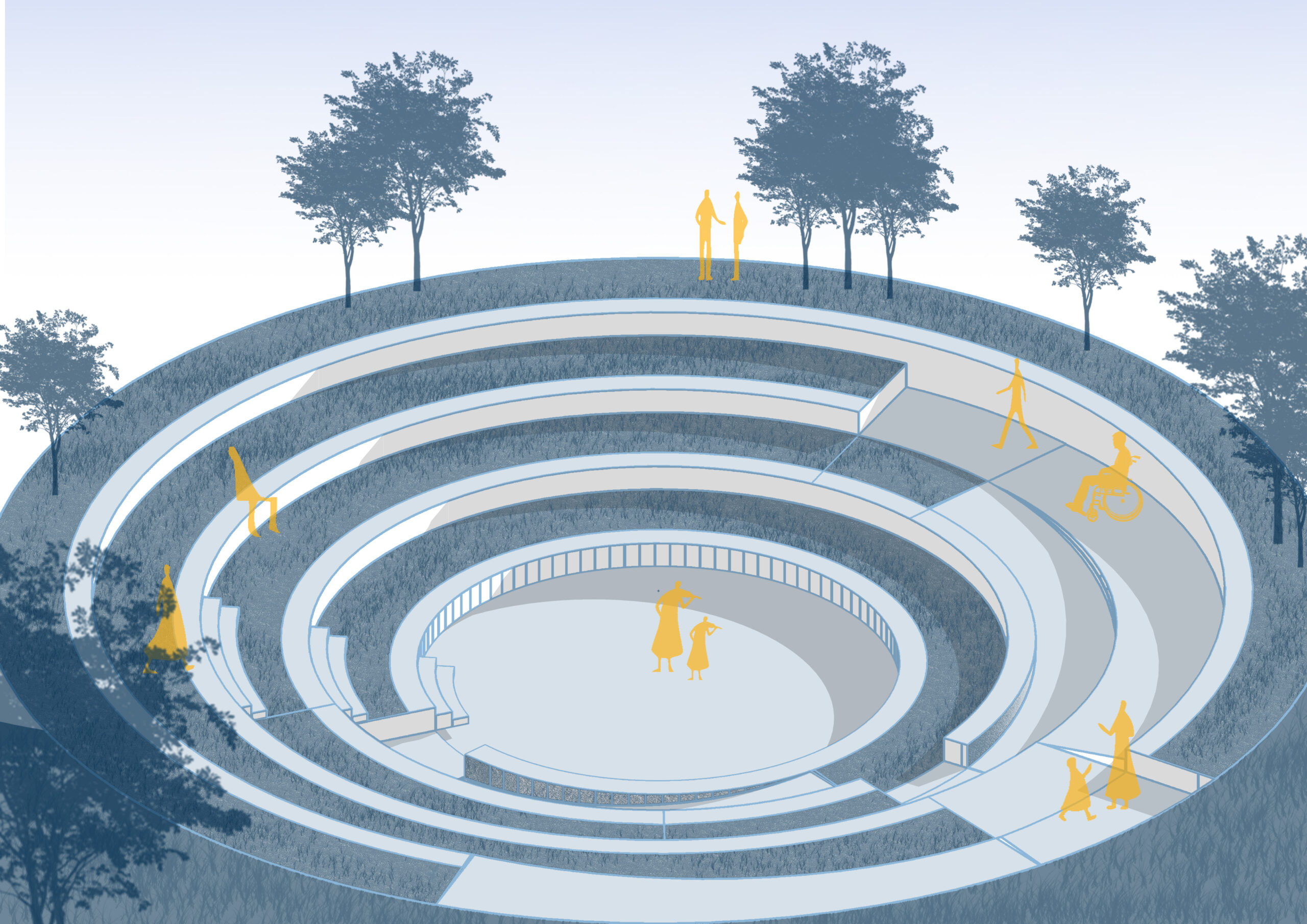
This zonal diagram illustrates a thoughtfully planned site layout divided into three zones based on activity levels and sound intensity: Noisy Zone, Moderate Zone, and Quiet Zone.
Noisy Zone (Activity & Play)
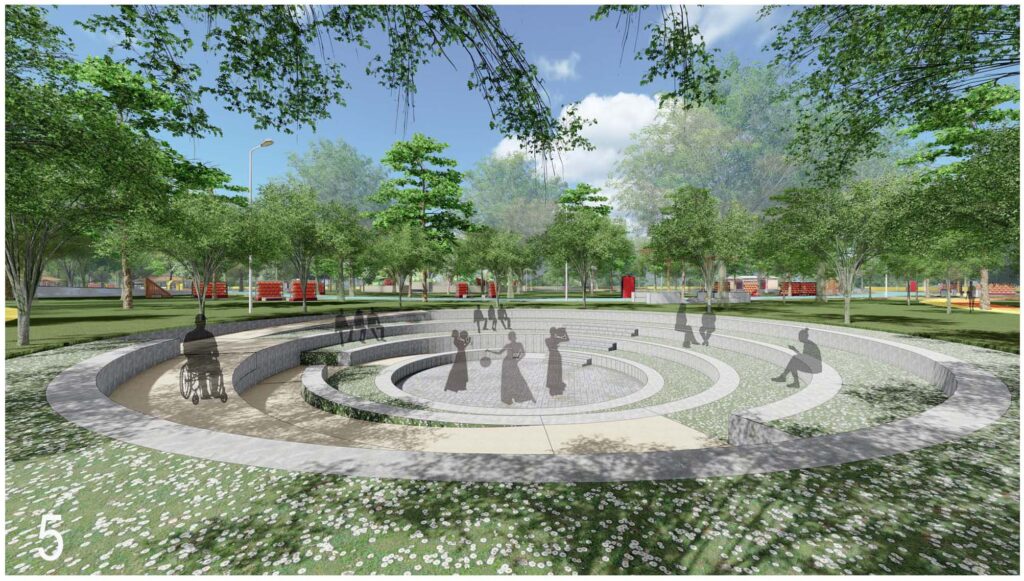
The Noisy Zone is strategically located along the outer periphery of the site, designed to accommodate high-traffic and high-energy activities such as open amphitheaters, communal seating areas, and social gathering spaces. As this area attracts the highest population density, it is placed along the edge to allow easy access and to prevent disturbance to the inner zones.
Moderate Zone (Relaxed Social Interaction)
Moving inward, the Moderate Zone acts as a buffer between the noisy and quiet areas. This zone supports semi-active uses like resting spaces, and small group interactions. It maintains a balanced atmosphere—neither too loud nor entirely silent—and helps create a smooth transition in terms of user experience and acoustic conditions.
Quiet Zone (Nature Immersion & Calm Retreats)
At the core of the site lies the Quiet Zone, where the population density is intentionally kept low. Surrounded by the other two zones, it is insulated from noise and movement, making it ideal for calm, reflective activities such as meditation, nature appreciation, camping or quiet play. The inward zoning sequence noisy at the edge, moderate in the middle, and quiet at the center fosters a gradual shift from public to personal, from loud to serene, creating a spatial experience that supports a range of user needs while maintaining harmony across the site.
This vantage as a location can boost the socio-economic condition of the locals and to make this possible a proper infrastructure needs to be developed and considers the use of local material and technology that are abundantly available including the local skills and craftmanship.
A defining feature of the park is its approach to water sustainability. Considering the monsoon-dominant climate of the region, the design incorporates an integrated rainwater harvesting system that turns runoff into a resource.
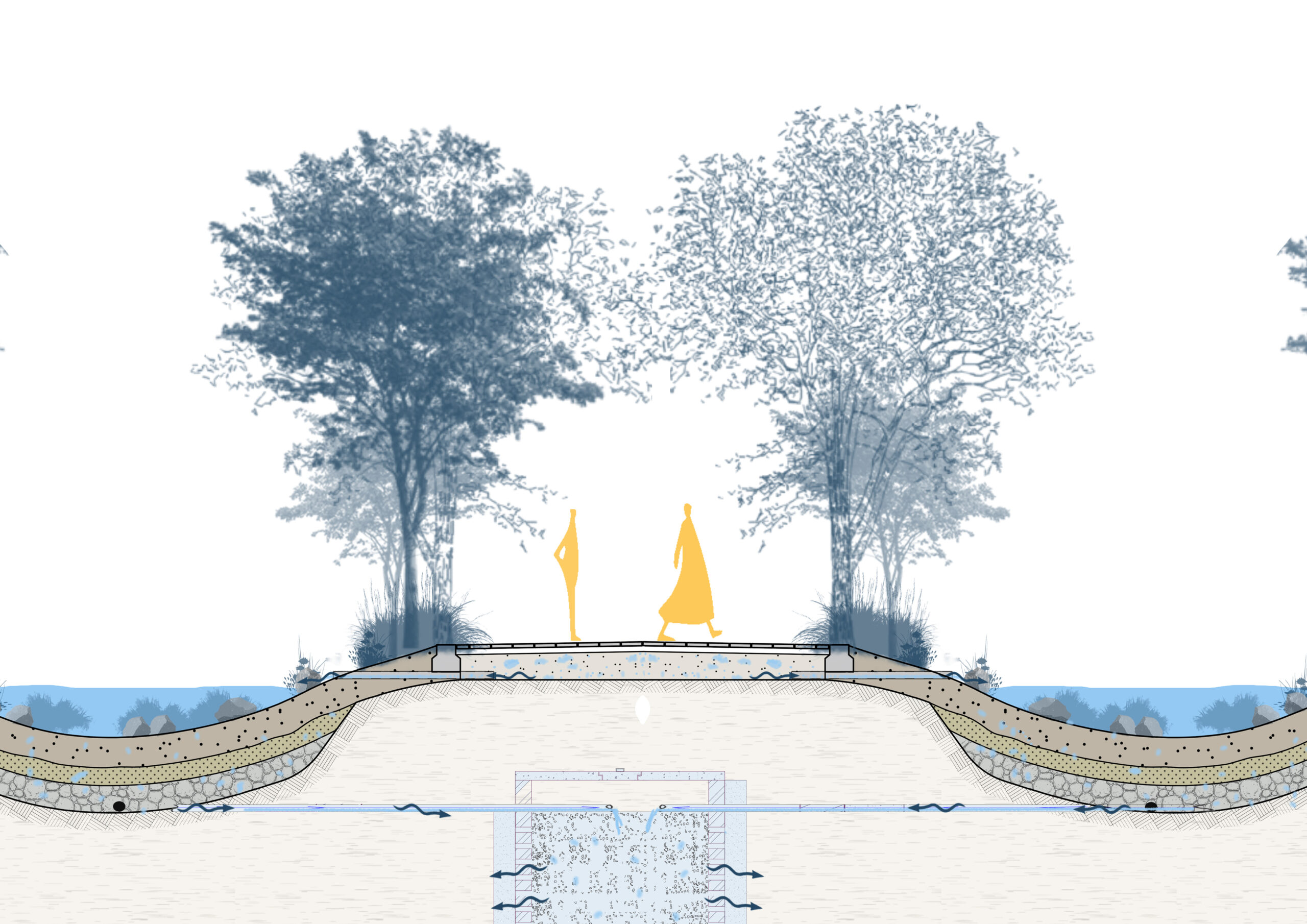
Bioswales are embedded along pathways and across the landscape. These shallow, vegetated channels filter stormwater, remove sediments, and direct flow toward collection points. The filtered water passes through soak pits, allowing for groundwater recharge and reducing urban runoff. Finally, water is stored in ponds that are distributed throughout the park. These ponds not only serve ecological functions—supporting birds, aquatic plants, and amphibians—but also contribute to passive cooling by enhancing evaporative moisture in the air. This closed-loop water cycle ensures that the park remains resilient during both dry and wet seasons.
Inclusive and Human-Centered Design
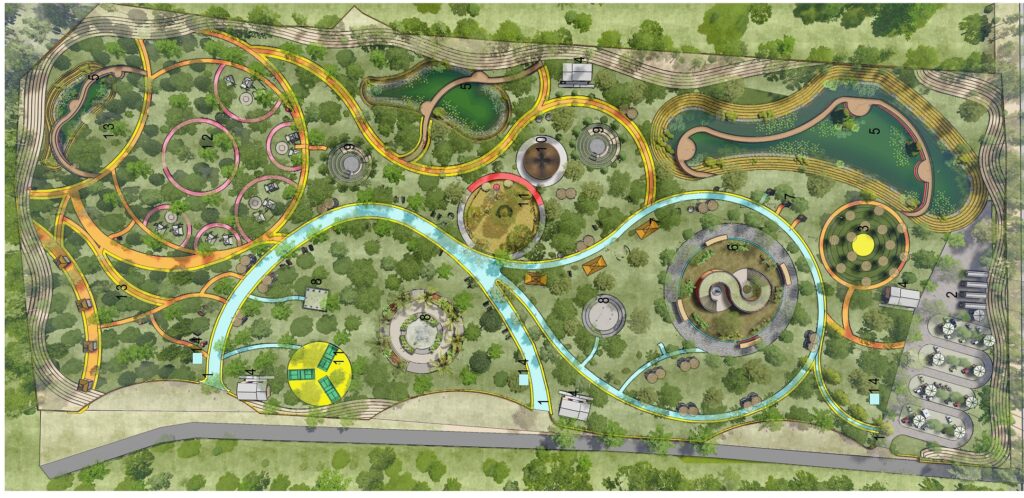
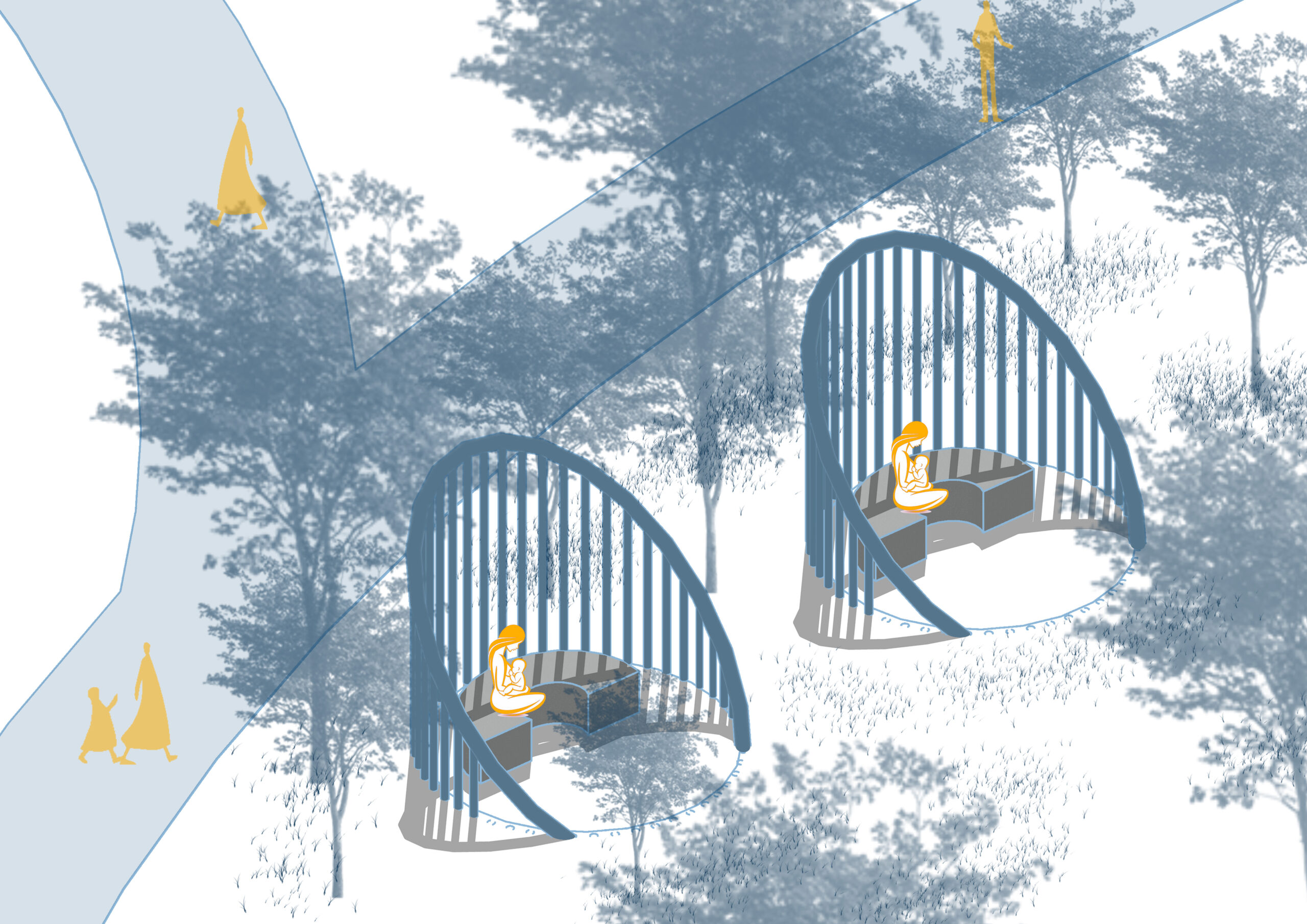
Inclusivity and user-friendliness are at the core of the park’s spatial and architectural language. The aim is to ensure that people of all ages, genders, and abilities feel welcome, safe, and comfortable. Women-friendly spaces include well-placed breastfeeding zones, safe pathways, and shaded seating designed with privacy in mind. Universal accessibility is ensured through ramps, tactile paving for visually impaired users, and benches with back and armrests for elderly users. Wayfinding through colored pathways helps in intuitive navigation. Each zone has its own distinct path color, allowing users to orient themselves within the vast site and eliminating the sense of being lost or overwhelmed. The result is a park that invites interaction and comfort for every visitor—children, adults, elderly, and people with special needs alike.
Climate-Responsive and Passive Cooling Strategies
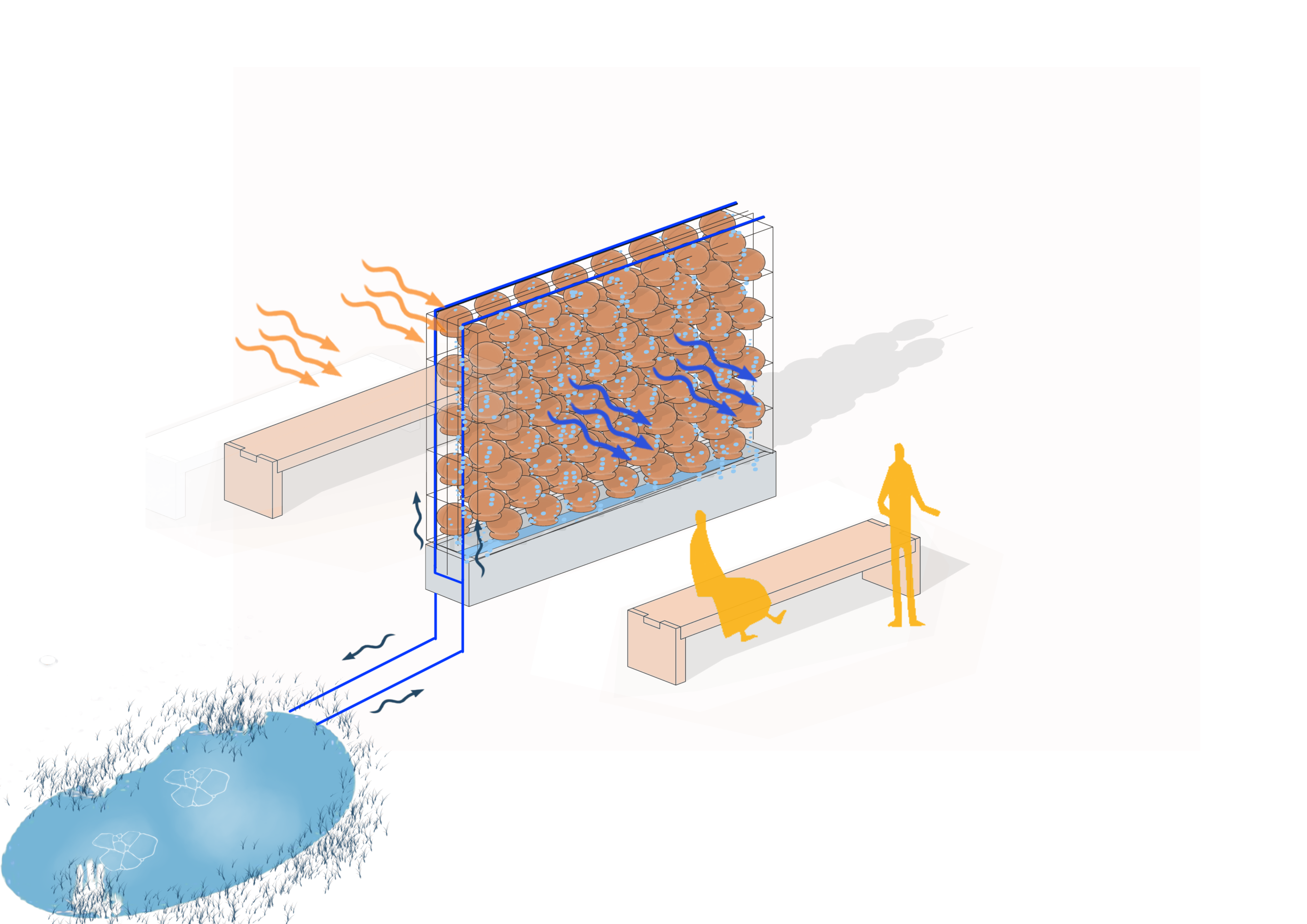
Given the hot and humid climate of Sunwal, the park is designed with several passive cooling techniques to create thermally comfortable outdoor spaces: Terracotta-based cooling elements integrated into seating and water features act as heat absorbers while visually grounding the park in local materiality. Gazebos with double roofs utilize the stack effect to allow hot air to escape naturally while keeping the shaded spaces below cool and breezy. Strategically placed ponds work in tandem with vegetation to generate land breezes, improving the overall microclimate and creating a cooling gradient across the site. These strategies reduce the dependency on artificial cooling while promoting energy-conscious, environmentally sensitive design.
Additionally, the planting strategy focuses on the use of **native plant species** to support local biodiversity. These species are well-adapted to the local climate, require minimal maintenance, and provide essential habitats for birds, insects, and small wildlife. By preserving and enhancing ecological networks, the park promotes long-term environmental sustainability and resilience
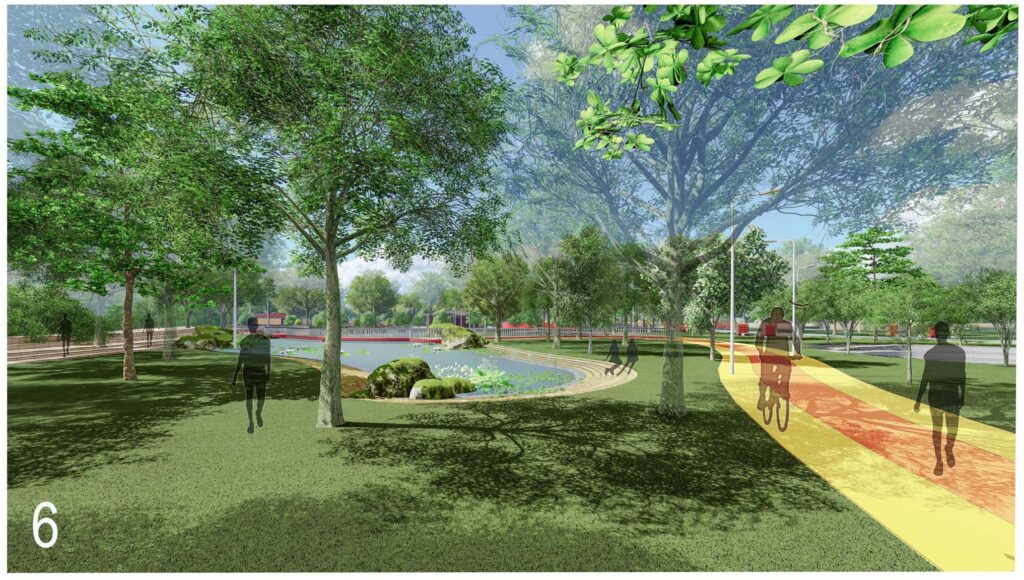
Pathways—The pathway is designed as a vibrant, dynamic spine of the park that enhances both movement and visual identity. Using a bold combination of blue and orange for the pedestrian lane, the pathway creates a playful and energetic rhythm that guides visitors through different park zones. Along both sides, a distinct yellow strip clearly marks the dedicated cycle tracks, ensuring safety and separation between cyclists and walkers. The color palette not only aids in wayfinding but also adds a youthful, contemporary character to the landscape. Textured, non-slip surfaces and gentle curves make the path accessible and engaging
Fountain– fountain areas are also divided in three diff areas with different kind of fountain types so that people can enjoy according to their wish and the water in the fountain is used by water channeling from lake as well as water channeling in rainy season. Native plants, flowering shrubs, and mood lighting enhance the space’s appeal throughout the day and into the evening. Strategically located at the heart of the park, the fountain area serves as a social anchor, encouraging people of all ages to pause, connect, and enjoy the multisensory experience of water in nature.
Plants – The planting strategy focuses on reintroducing and preserving native tree species in large numbers to enhance the ecological resilience and cultural identity of the Sunwal area. These species not only provide ample shade, clean air, and habitat for local birds and pollinators but also hold deep cultural and medicinal significance in the region. Community involvement is encouraged through tree- tagging, educational signage, and seasonal plantation drives, ensuring the space becomes a living classroom and a legacy of green stewardship for future generations.
Breastfeeding – The breastfeeding space in the park is designed as a serene, inclusive, and nature-integrated refuge for nursing mothers and caregivers. Strategically located near family activity zones yet buffered by natural elements like hedges, bamboo screens, or gentle elevation changes, it offers visual privacy without complete isolation.
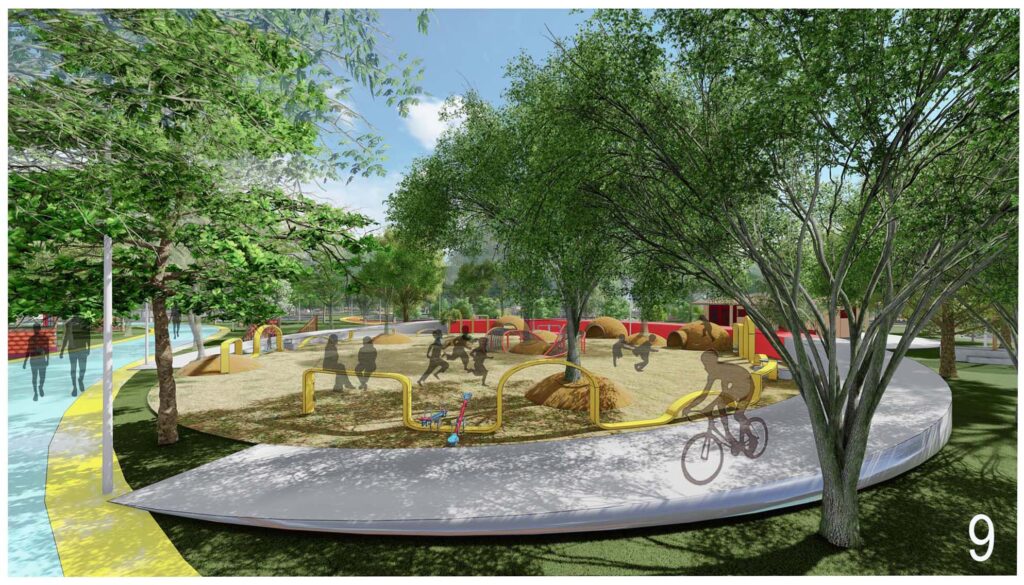
Children’s play – children’s play areas are located near the picnic area so that parents can supervise their children and it can be a safe space for them. The children’s play area is designed as an inclusive, nature-integrated zone that caters to all age groups and encourages imaginative, active, and social play. a multi-use badminton court doubles as a flexible open space for group games and activities. Hidden dens beneath the mounds provide cozy, shaded nooks for quiet play, storytelling, or resting. The entire space is connected by soft, accessible surfaces and shaded by native trees, ensuring comfort, safety, and inclusivity for children of all abilities.
Birds Watching – The bird watching area is a peaceful, natural space inside the park where people can enjoy watching birds in their own habitat. It is set within a small jungle filled with native trees, plants, and water sources that attract different types of birds. Easy walking paths connect the area, and small signs or pictures help people learn about the birds they see.
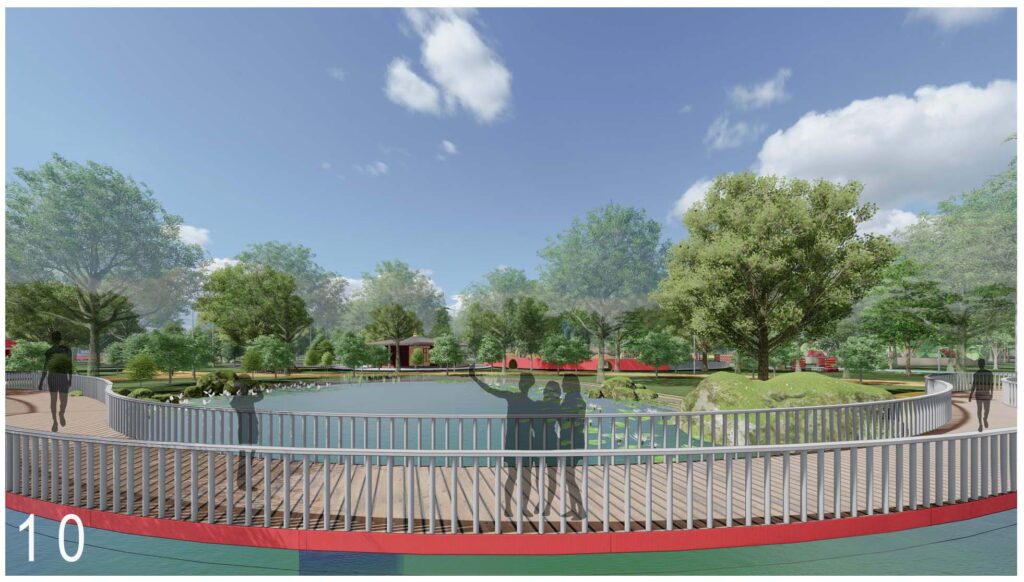
Pond – The lake area is designed as a peaceful and scenic spot for relaxation and gentle strolls. A gracefully curved bridge spans part of the lake, allowing visitors to walk close to the water and enjoy panoramic views of the surroundings. Along the shoreline, comfortable seating areas with benches and shaded spots invite people to rest, reflect, and connect with nature. Native plants and trees frame the lake, creating a calm, natural atmosphere while providing habitat for local wildlife.
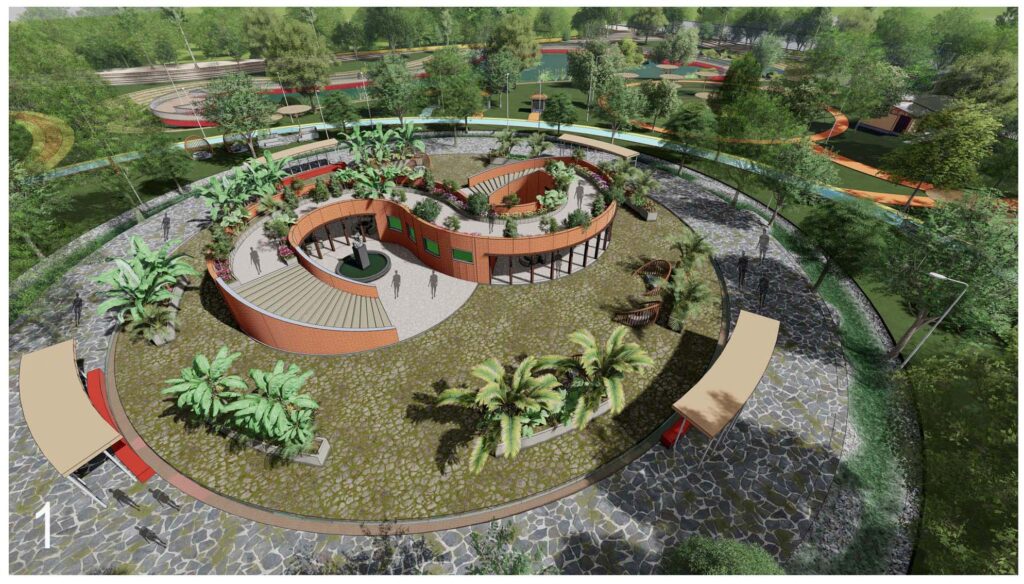
Yoga -The yoga space is a calm and inspiring area located near the lake, designed to connect practitioners with nature and promote relaxation. It features a circular layout surrounded by tall bamboo umbrellas that provide gentle shade while allowing fresh air and soft natural light to filter through. Positioned close to the water’s edge, the space offers soothing views and the calming sounds of the lake, helping deepen the yoga experience
Washrooms-The washroom facility is designed to be fully inclusive, accessible, and respectful of all users’ needs and identities. It features separate, spacious stalls that accommodate disabled people with easy wheelchair access. Additionally, a dedicated private stall is provided for LGBTQ+ individuals, offering a safe and dignified space that respects privacy and promotes inclusivity. The facility also includes a comfortable breastfeeding room, thoughtfully equipped with seating.
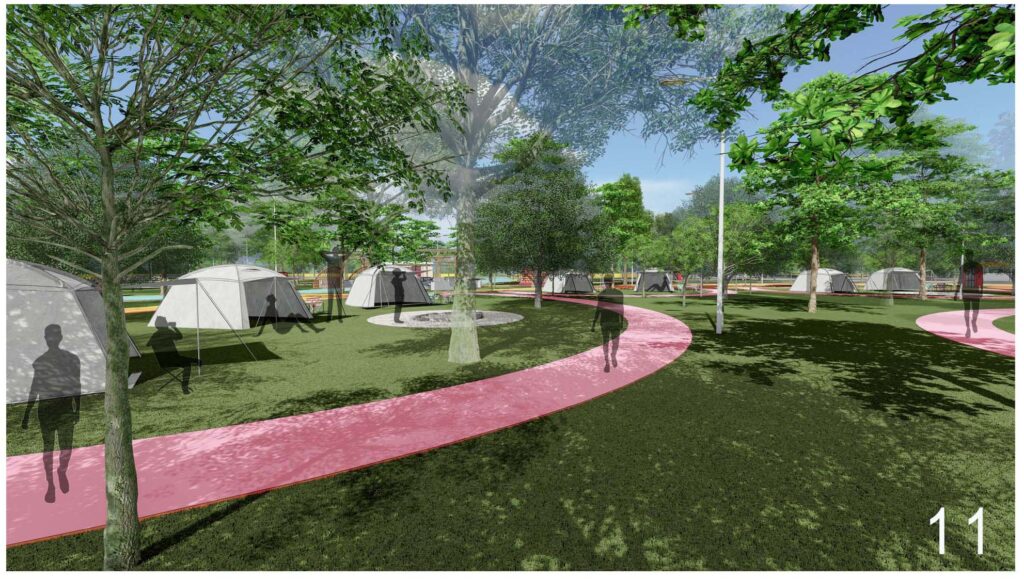
Camping – The camping area is thoughtfully designed to offer privacy and community experiences simultaneously. Individual tents are spaced apart with natural boundaries like shrubs or low hedges, giving each group its own cozy, defined territory for comfort and quiet. Nearby, an open amphitheater serves as a central gathering spot for evening bonfires, storytelling, and group activities.
Gazebo-The gazebo is thoughtfully designed as a multifunctional social hub within the park, available in varying sizes to accommodate small families to larger community gatherings. Featuring a distinctive double-roof structure, it promotes effective cross ventilation, keeping the space cool and comfortable even in warm climates. The design blends traditional shelter with modern utility, integrating a built-in concrete kitchen counter and a dish display area ideal for group picnics, cultural events, or communal meals
Conclusion
This Park is not just a green space—it is a living infrastructure that embodies sustainability, inclusivity, and spatial intelligence. It fosters wellness, community bonding, environmental awareness, and a reconnection with the rhythms of nature. Through thoughtful zoning, climate-adaptive design, and a strong emphasis on accessibility, the park aspires to become a timeless civic landmark for the people of Sunwal and beyond.
Project: United Nations